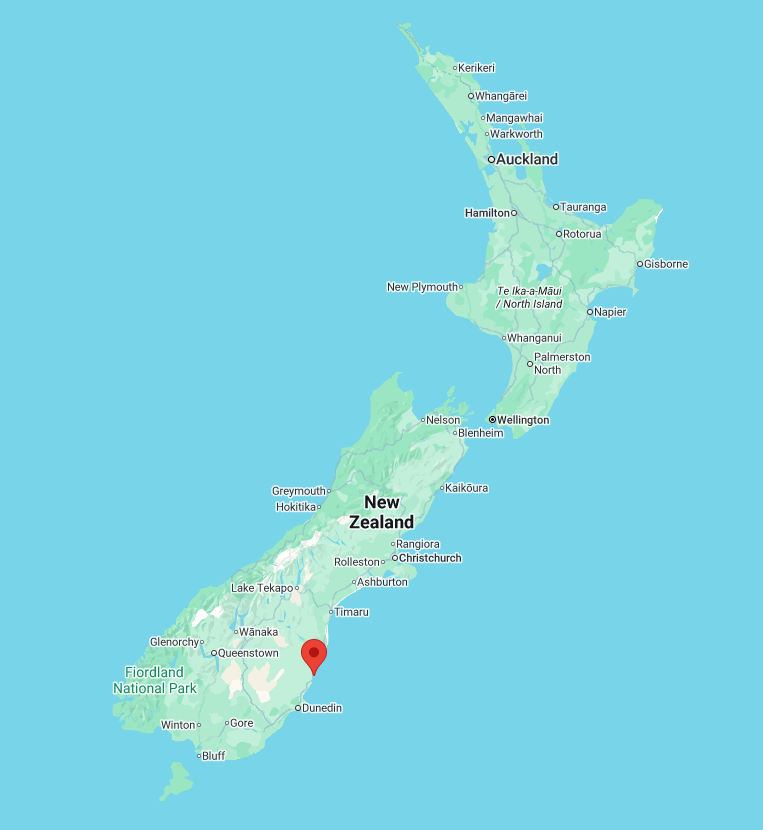
Moeraki Point (also known as the Moeraki Headland) is the rocky promontory that forms the southern arm of the bay where the Moeraki Boulders are found, in the Otago region of New Zealand. While the boulders are a sedimentary phenomenon, the point itself is volcanic.
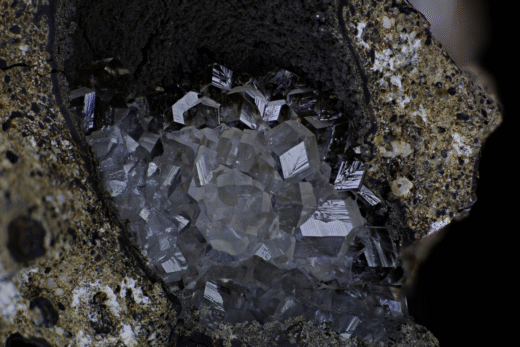
The rocks at Moeraki Point are part of the Waianakarua Formation, dating back to the Miocene epoch (around 13-15 million years ago). Unlike the surrounding sedimentary rocks, this formation consists of submarine volcanic deposits. The cliffs and shore platforms are made of volcanic tuff and breccia. This material was formed from explosive underwater volcanic eruptions. Hot ash, volcanic glass, and larger rock fragments (the “breccia”) were ejected and settled on the seafloor. This is a well-known locality for zeolites and associated minerals.
According to Mindat as at 14th August 2025, the mineral list includes: Analcime, Barite, Calcite, Celadonite, Chabazite, Clinoptilolite, Erionite-Ca, Erionite-K, Marcasite, Nontronite, Opal, Phillipsite-K, Pyrite, Quartz, and Siderite.